
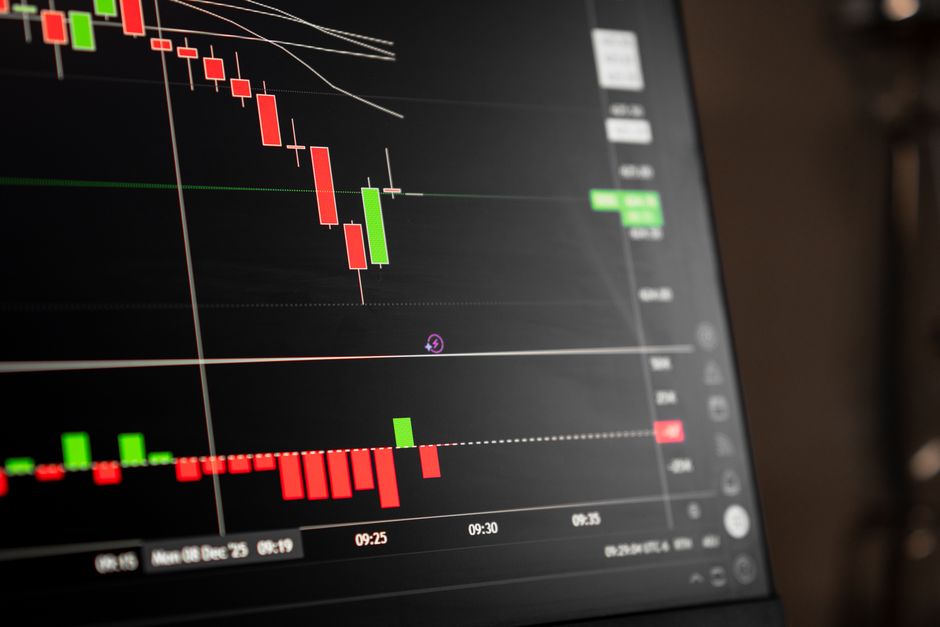
Ever scrolled through your social media feed and seen a stock suddenly trending, with everyone seemingly jumping on board? It can feel like a whirlwind, with prices soaring one day and then dipping just as quickly the next. This kind of rapid, sometimes unpredictable, movement is a common feature of the stock market, and it’s something every investor, from beginners to seasoned pros, needs to understand.
While the excitement of a fast-rising stock can be tempting, these quick surges and drops often highlight the inherent volatility of the market. Understanding what causes these swings and, more importantly, how to navigate them effectively, is key to building a resilient financial future. It’s not about avoiding all risk, but about making informed decisions that align with your personal financial goals.
What Causes Stock Market Volatility?
Stock market volatility refers to the degree of variation of a trading price series over time. In simpler terms, it’s how much and how quickly stock prices go up and down. A volatile market sees large, frequent price changes, while a less volatile market has more stable, gradual movements.
Several factors contribute to stock market volatility:
Economic News and Data
Major economic announcements, like inflation reports, interest rate changes by the Federal Reserve, employment figures, or GDP growth, can significantly sway investor sentiment. Positive news might lead to a rally, while negative news could trigger a sell-off. For instance, if inflation is higher than expected, investors might worry about corporate profits shrinking, leading them to sell stocks.
Company-Specific Events
Individual company news can also cause a stock to be volatile. Earnings reports (how much profit a company made), product launches, mergers or acquisitions, leadership changes, or even a major lawsuit can all lead to dramatic price movements for that specific company’s stock. If a company announces surprisingly strong earnings, its stock price might jump. Conversely, a missed earnings target or a product recall could send it tumbling.
Geopolitical Events
Global events, such as political instability, international conflicts, natural disasters, or changes in trade agreements, can create widespread uncertainty. This uncertainty often translates into market volatility as investors try to predict the impact of these events on the global economy and corporate earnings. For example, a major conflict in an oil-producing region could cause oil prices to spike, impacting energy-intensive industries and, by extension, the broader market.
Investor Sentiment and Psychology
This is where things can get particularly interesting, and sometimes, less rational. Investor sentiment refers to the overall attitude of investors toward a particular market or asset. If many investors are optimistic (bullish), they’re more likely to buy, driving prices up. If they’re pessimistic (bearish), they’re more likely to sell, pushing prices down. Sometimes, this sentiment can be driven by social media trends, news headlines, or even just a general “herd mentality,” where people follow what others are doing without necessarily doing their own research. This can lead to rapid price swings that are disconnected from a company’s actual financial health.
Technical Trading and Algorithms
In today’s high-speed markets, a significant portion of trading is done by computer algorithms. These programs are designed to execute trades based on specific market conditions, price patterns, or news analysis. When many algorithms react to the same triggers, they can amplify price movements, contributing to volatility.
Why Understanding Volatility Matters for Your Investments
Understanding stock market volatility isn’t just an academic exercise; it has real implications for your personal finances and investment success.
It Impacts Risk and Return
Higher volatility often means higher potential for both gains and losses. While a stock might shoot up quickly, it can also fall just as fast. For long-term investors, this means being prepared for the ups and downs without panicking. For short-term traders, volatility is often sought after, but it comes with significantly higher risk.
It Tests Your Emotional Discipline
One of the biggest challenges for investors during volatile periods is managing emotions. Seeing your portfolio value drop can be unsettling and might tempt you to sell everything to “stop the bleeding.” Conversely, seeing a stock rapidly rise might tempt you to chase it, buying at the peak. Both reactions can be detrimental to your long-term financial health.
It Creates Opportunities (and Pitfalls)
Volatility isn’t always a bad thing. For long-term investors with a solid strategy, market downturns caused by volatility can present opportunities to buy quality assets at lower prices. However, it also creates pitfalls for those who react impulsively or chase “hot” stocks without understanding the underlying fundamentals.
Concrete Steps to Protect Your Investments from Volatility
Navigating a volatile stock market requires a thoughtful, disciplined approach. Here are 3 to 5 actionable steps you can take to protect your investments and stay on track toward your financial goals.
1. Define Your Investment Goals and Time Horizon
Before you invest a single dollar, clarify why you’re investing and when you’ll need the money. Are you saving for retirement 30 years from now, a down payment on a house in five years, or a child’s college education in 10? Your time horizon is crucial because it dictates how much risk you can reasonably take.
- Long-Term Goals (10+ years): If your goal is far off, you generally have more time to ride out market dips and recover from downturns. This allows you to potentially take on more risk, as historically, the stock market has trended upwards over long periods. Volatility becomes less of a concern because you’re investing for growth over decades, not days.
- Short-Term Goals (under 5 years): For money you’ll need relatively soon, it’s generally wiser to keep it in less volatile assets, such as high-yield savings accounts, Certificates of Deposit (CDs), or short-term bonds. You don’t want to risk a significant portion of your down payment fund being wiped out by a market correction just when you need it.
Knowing your goals helps you avoid panicking during volatile periods. If you know you don’t need the money for a long time, you’re less likely to sell low out of fear.
2. Diversify Your Portfolio Broadly
Diversification is perhaps the most fundamental principle of protecting your investments against volatility. It means spreading your money across different types of assets, industries, and geographic regions to reduce the impact of any single investment performing poorly. Think of it like a picnic basket: you wouldn’t fill it with only one type of food, just in case someone doesn’t like it or it goes bad.
- Asset Classes: Don’t put all your money in stocks. Consider a mix of stocks, bonds, and potentially real estate or cash equivalents. Stocks offer growth potential but are more volatile. Bonds are generally less volatile and can provide income, acting as a buffer during stock market downturns.
- Industry and Sector: Within stocks, avoid putting all your eggs in one industry basket. If you invest only in tech stocks and the tech sector faces a downturn, your entire portfolio could suffer. Spread your investments across different sectors like healthcare, consumer goods, energy, and finance.
- Geographic Diversification: Consider investing in international stocks in addition to U.S. stocks. Different global markets can perform differently at various times.
- How to Diversify: For most everyday investors, low-cost index funds and Exchange-Traded Funds (ETFs) are excellent tools for diversification. These funds hold hundreds or even thousands of different stocks or bonds, automatically providing broad diversification with a single investment. For example, an S&P 500 index fund invests in the 500 largest U.S. companies, giving you exposure to many industries.
When one part of your diversified portfolio is performing poorly due to volatility, another part might be holding steady or even performing well, cushioning the blow to your overall returns.
3. Embrace Dollar-Cost Averaging
Dollar-cost averaging is a powerful strategy for mitigating the impact of market volatility, especially for long-term investors. It involves investing a fixed amount of money at regular intervals (e.g., $100 every two weeks, or $500 every month), regardless of whether the market is up or down.
- How it Works: When stock prices are high, your fixed investment buys fewer shares. When prices are low (during a volatile downturn), your same fixed investment buys more shares. Over time, this strategy helps you achieve an average purchase price that is often lower than if you tried to time the market by buying only when you thought prices were low.
- Removes Emotion: One of the biggest benefits of dollar-cost averaging is that it takes emotion out of investing. You’re committed to a schedule, so you don’t have to worry about trying to predict market peaks and valleys (which is notoriously difficult, even for professionals).
- Benefits During Volatility: During periods of high volatility, dollar-cost averaging is particularly effective. As prices fluctuate, you’re consistently buying both high and low, effectively “averaging out” your cost basis and potentially setting yourself up for greater gains when the market eventually recovers. It turns market downturns into opportunities to buy more shares at a discount.
4. Focus on the Long Term and Avoid Emotional Reactions
This is easier said than done, but it’s perhaps the most critical step. The stock market has always experienced ups and downs, but historically, it has trended upward over the long run. Short-term volatility is a normal part of investing.
- Resist the Urge to Panic Sell: When the market drops, your instinct might be to sell everything to prevent further losses. However, selling during a downturn locks in your losses and prevents you from participating in the eventual recovery. Many of the market’s best days often follow its worst days.
- Avoid Chasing “Hot” Stocks: The flip side of panic selling is chasing stocks that are rapidly rising based on social media buzz or hype, often disconnected from their underlying value. These “meme stocks” can be extremely volatile and prone to quick, dramatic crashes, leading to significant losses for those who buy at the peak. Stick to your long-term investment plan and avoid speculative trading unless you fully understand and accept the extremely high risks involved.
- Rebalance Your Portfolio (Periodically): Over time, market movements can cause your asset allocation (the mix of stocks, bonds, etc.) to drift from your target. For example, if stocks have had a great run, they might now represent a larger percentage of your portfolio than you originally intended. Periodically (e.g., once a year), rebalance your portfolio by selling some of your overperforming assets and buying more of your underperforming ones to bring your allocation back to your desired levels. This is a disciplined way to “sell high and buy low.”
5. Continuously Educate Yourself and Stay Informed (But Don’t Obsess)
While you shouldn’t react to every market fluctuation, staying generally informed about economic trends and how they might affect your investments is wise. Read reputable financial news sources, understand basic economic indicators, and learn about the companies or funds you’re invested in.
- Understand What You Own: If you invest in individual stocks, truly understand the company’s business model, financial health, and competitive landscape. If you invest in funds, know what assets the fund holds and its investment strategy.
- Distinguish Noise from Signal: In today’s 24/7 news cycle, there’s a constant stream of information. Learn to differentiate between short-term “noise” (like daily market fluctuations or speculative rumors) and long-term “signals” (like fundamental changes in economic conditions or company performance).
- Seek Professional Advice: If you find navigating the complexities of the market overwhelming, consider consulting a qualified financial advisor. They can help you create a personalized investment plan, understand your risk tolerance, and provide guidance during volatile periods.
Understanding how to understand stock market volatility is a crucial skill for any investor. While it can feel intimidating to see prices swing wildly, a disciplined, long-term approach, combined with smart strategies like diversification and dollar-cost averaging, can help you not only protect your investments but also potentially capitalize on market opportunities. Remember, building wealth is often a marathon, not a sprint, and successfully navigating the occasional bumps in the road is part of the journey.
What strategies have you found most helpful in managing your investments during volatile times? Share your thoughts in the comments below!