
You’re standing at the pump, and the price per gallon has jumped another dime since last week. You’re not imagining it. When refineries shut down halfway around the world—whether from accidents, attacks, or political tension—that disruption ripples straight through to your wallet within days. Understanding how global energy markets work isn’t just for investors; it’s essential personal finance knowledge for anyone managing a monthly budget, because oil shocks hit your grocery bill, heating costs, and everyday commute faster than you’d think.
The truth is, most Americans treat gas prices like weather—something that happens to them. But the connection between international energy disruptions and your household spending is direct and predictable. The better you understand this link, the better you can budget defensively, time major purchases strategically, and protect your emergency fund from unexpected spikes. This article walks you through exactly how these global events translate into your local costs, and what you can actually do about it.
Why Refinery Shutdowns Matter to Your Wallet
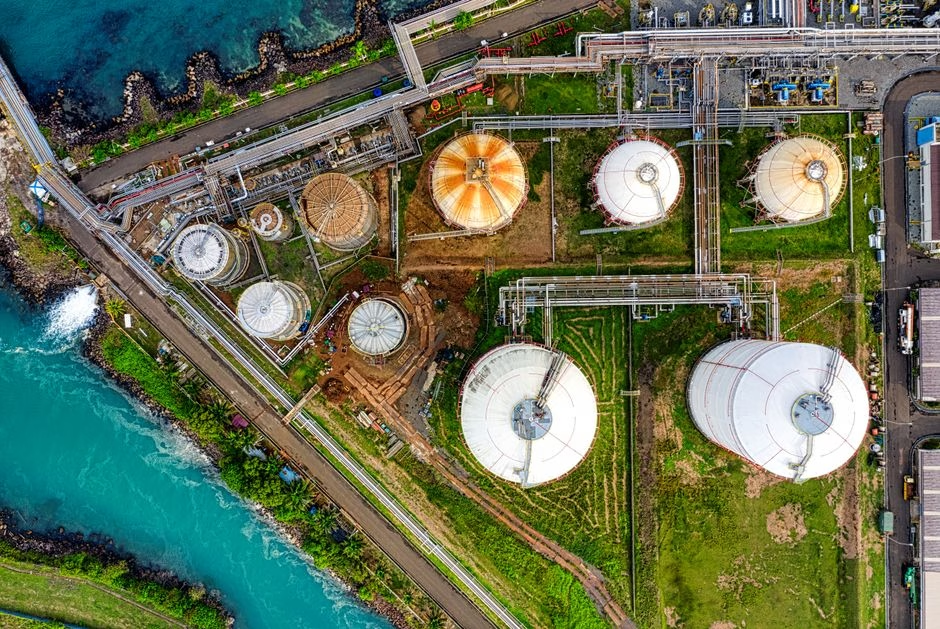
Refineries are the middleman between crude oil and the gas in your car. When a major facility goes down—even temporarily—global refinery capacity tightens. That means less gasoline and diesel hitting the market worldwide, which pushes prices up almost immediately. Within 24 to 48 hours, traders adjust futures prices, and within a week, your local gas station reflects the change.
The U.S. imports about 8 million barrels of oil per day and relies on a network of roughly 130 operable refineries. If even one large refinery shuts down for maintenance or an emergency, it can remove 200,000 to 500,000 barrels per day from production. That’s enough to tighten supply and send prices climbing. Add geopolitical tension in the Middle East—where about one-third of global crude originates—and you’re looking at a supply shock that affects not just gasoline, but heating oil, jet fuel, and the plastics in your groceries.
How Fast Do Prices Rise?
Gas prices typically respond within days to refinery disruptions, but the full impact takes weeks to play out. Crude oil prices spike first (often within hours), then refined products follow. Your neighborhood station might not raise prices immediately, but by your next fill-up or two, you’ll see it reflected at the pump.
Diesel, which is used by trucks delivering goods to stores, often rises even faster than regular gasoline. That cost gets passed to consumers through higher grocery prices, shipping fees on online orders, and price increases on almost anything transported by truck—which is most of it.
The Three Cost Categories That Get Hit First
When global oil disruptions send prices climbing, your household expenses rise across three main areas. Knowing which ones to watch helps you adjust your budget before the pain hits.
Gas and Transportation Costs
This is the most obvious one. Every 10-cent jump per gallon costs a family that drives 1,000 miles per month an extra $4 to $5. Over a year, that’s $48 to $60 gone from your budget. If you commute 30 miles daily for work, a 50-cent spike per gallon means roughly $150 more per month in driving costs.
The key strategy here is to lock in driving habits before a spike hits. If you’re considering a car purchase or a job change that affects your commute, pay attention to price trends. A job that requires twice the daily driving sounds good until gas prices spike. Similarly, if you’re thinking about electric vehicle adoption, energy disruptions make the EV economics even more attractive long-term.
Heating and Utility Bills
If you heat your home with oil (common in the Northeast and upper Midwest), a crude oil disruption directly raises your winter heating costs. Even if you heat with natural gas or electric, the overall energy market tightens, and rates often climb too. A family in a cold climate could see heating bills rise by $200 to $500 over a winter if oil prices jump significantly.
The defensive move here is winterization and insulation work done before heating season—and certainly before an energy crisis. Weatherstripping, attic insulation, and furnace maintenance are investments that typically pay for themselves within two heating seasons, and they become even more valuable when energy prices spike.
Grocery and Shipping Costs
Diesel fuels the trucks that move food from distribution centers to supermarkets. When diesel prices rise, grocers face higher costs, which they pass to you within one to three weeks. You might not see a single product jump 10%, but collectively, your weekly grocery bill rises 2% to 4% during periods of elevated fuel costs. Over a year, that’s an extra $500 to $1,000 for an average family.
Shipping costs for online orders rise too. Many retailers absorb some of this cost initially, but eventually it shows up as higher prices or new shipping fees.
How to Recession-Proof Your Budget Against Energy Shocks
Energy disruptions are unpredictable, but their financial impact on your household is not. Here are the concrete steps working Americans use to minimize the damage.
Build a Dedicated Fuel and Energy Buffer Into Your Emergency Fund
Most financial experts recommend an emergency fund covering 3 to 6 months of essential expenses. If energy costs usually run $200 to $300 per month for you (gas, heating, electricity combined), add an extra $500 to $1,000 specifically for energy price spikes. Keep this in a high-yield savings account earning 4% to 5% annual interest—it’s accessible within 24 hours but separate from your main checking account, so you won’t accidentally spend it.
This buffer does two things: it keeps a price spike from forcing you to use credit cards or cut other budget categories, and psychologically, it keeps you calm when you see $4.50-per-gallon gas on the news.
Track Gas Prices Weekly and Time Large Purchases
You don’t need an app (though GasBuddy and similar tools exist). Just check your local average gas price every Sunday. When prices are low or stable, that’s when you should plan road trips, move house if possible, or time maintenance work that requires driving vendors to your home. Conversely, when prices spike, delay discretionary travel and bulk errands together to minimize trips.
For big purchases—furniture delivery, moving services, or anything with transportation costs baked in—always get quotes when energy prices are down. Contractors and movers typically adjust quotes based on current fuel costs, so timing matters.
Adjust Your Grocery Shopping Strategy
When diesel prices climb, grocery prices follow within 2 to 4 weeks. Here’s the counter-move: buy non-perishable staples when prices are stable, and stockpile shelf-stable proteins, grains, and canned goods. This isn’t doomsday prepping; it’s rational budget smoothing. You’re going to buy these items anyway—you’re just buying them earlier and at lower prices.
Focus on items with long shelf lives: canned beans, pasta, rice, frozen vegetables, peanut butter, and oats. A $20 investment in extra shelf-stable groceries when prices are normal can save you $40 to $50 when prices spike a few weeks later. Most families throw away far more food than this, so it’s a straightforward win.
Refinance Debt While Rates Are Predictable
Energy shocks sometimes trigger broader economic uncertainty, which can affect interest rates and credit availability. If you’re carrying credit card debt or considering a major loan (car, home), don’t wait for an energy crisis to refinance. Lock in favorable rates when the economy feels stable. A 0.5% lower interest rate on a $25,000 car loan saves you roughly $650 over the loan term.
Work From Home Days (If Your Job Allows)
If your employer offers flexibility, negotiate work-from-home days before fuel prices spike. One day per week at home saves roughly $40 to $60 per month in gas, wear-and-tear, and parking costs. It’s also a hedge: when prices spike, you already have a structured alternative to daily commuting rather than scrambling to adjust.
The Common Mistake: Panic Buying and Overreacting
The biggest financial error people make during energy disruptions is panic buying—filling your car’s tank multiple times unnecessarily or hoarding fuel or supplies out of fear rather than strategy. This wastes money, ties up cash flow, and often doesn’t help.
The correct mindset is calm preparation. You’re not betting on prices or trying to time a market bottom. You’re simply building buffers into normal budget categories so that when disruptions happen (not if, but when), they don’t derail your financial plan. Energy prices will always fluctuate. Your job is to make sure that fluctuation doesn’t become a crisis.
What You Can Do This Week
Start with one concrete action: review your monthly energy and transportation costs for the past three months. Add them up and calculate the total. Then commit to building a $500 buffer into a separate savings account over the next two months ($250 per month). Set it and forget it. Most people won’t need this buffer in any given year, but when a global refinery shuts down and prices spike, you’ll have the cushion already in place.
Second, check your local gas price and your recent utility bills. Notice them. Getting comfortable with tracking these prices takes the shock out of the system when they do move.
Energy disruptions will keep happening. Global oil markets are complex and vulnerable. But your household budget doesn’t have to be. A small amount of intentional buffering transforms an energy crisis from a financial emergency into a minor inconvenience.
What’s one energy or transportation cost in your current budget that you could trim by 5% to fund this buffer?