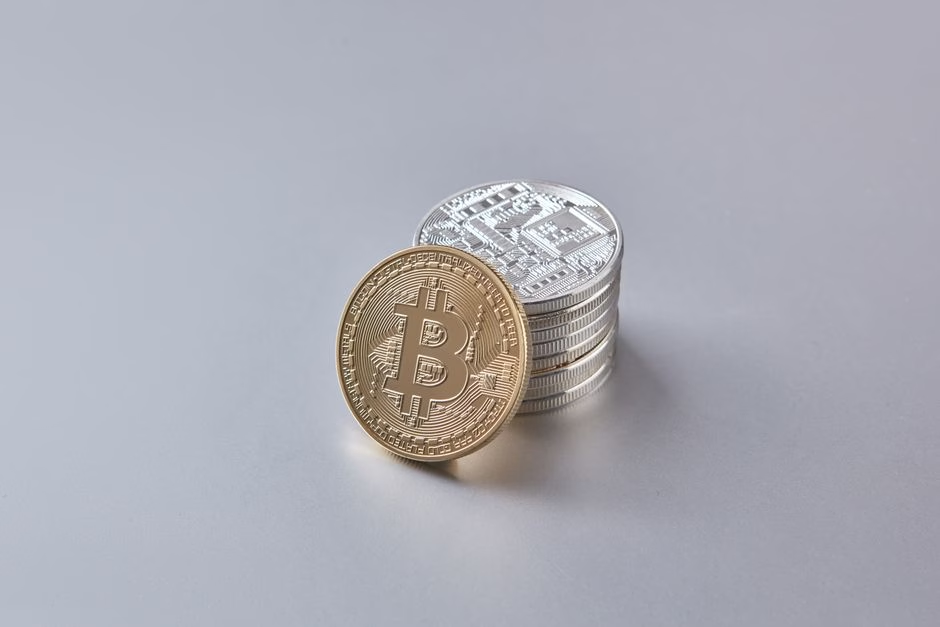
You’ve probably noticed “Fidelity crypto” popping up in your news feed or search results lately. If you’ve ever wondered whether a major brokerage firm offering cryptocurrency access changes the game for regular investors like you, you’re not alone—millions of Americans are asking the same question right now.
The short answer: it matters, but maybe not in the way you think. Fidelity adding or expanding cryptocurrency options doesn’t mean you should suddenly dump your emergency fund into Bitcoin. What it does mean is that the line between traditional investing and crypto is getting blurrier, and understanding how this shift affects your portfolio strategy is worth 20 minutes of your time today.
Let’s break down what’s actually happening, why it matters to your money, and how to think about it without the hype.
Why Fidelity Crypto Is Trending (And Why It Matters to You)
Fidelity is one of the largest investment firms in the United States, managing over $11 trillion in customer assets. When a firm that massive adds or expands cryptocurrency services, it signals something important: institutional-grade legitimacy is entering a space that used to feel fringe and risky.
Here’s why this trend is real: everyday Americans are increasingly curious about cryptocurrency, but they’ve been skeptical about where to buy it safely. Crypto exchanges can feel intimidating or untrustworthy. Fidelity, by contrast, is a household name that millions of Americans already trust with their 401(k)s, IRAs, and regular investment accounts. The combination of “Fidelity” and “crypto” removes a major barrier to entry—you don’t have to learn a completely new platform or worry about whether your exchange is legit.
This matters because access shapes behavior. When something gets easier to do through a trusted institution, more people do it. That can mean more retail investors adding crypto to their portfolios, which affects market prices, which affects you whether you’re invested in crypto or not.
The Real Question: Should You Buy Crypto Through Your Brokerage?
Before you log into your Fidelity account (or whatever broker you use), let’s separate emotion from strategy.
The fact that a mainstream brokerage offers cryptocurrency doesn’t make cryptocurrency a good fit for your personal situation. That’s a completely separate decision. Here’s what matters instead:
First, understand your own risk tolerance. Cryptocurrency is volatile—prices can swing 20%, 30%, or more in a single week. If you can’t sleep at night watching that happen, crypto probably isn’t for you, regardless of who’s offering it. Your gut feeling about risk is real data about yourself. Don’t ignore it because everyone else is talking about it.
Second, ask yourself what problem crypto solves for you. Are you looking to diversify beyond stocks and bonds? Are you betting on the future adoption of blockchain technology? Are you trying to make a quick profit? Each answer points to a different strategy—or might point to “this isn’t right for me right now.”
Third, consider your time horizon. Crypto is a long-term bet at best. If you need access to this money in the next three to five years, the volatility could force you to sell at a loss. That’s a mathematical problem, not a mindset problem.
How to Think About Crypto as Part of a Balanced Portfolio
If you do decide cryptocurrency makes sense for you, the next step is figuring out how much actually belongs in your portfolio.
Most financial advisors suggest that if you’re going to hold crypto, it should represent a small percentage of your overall net worth—somewhere in the 1% to 5% range, depending on your risk tolerance and goals. Why? Because it’s speculative. Speculative assets should never be the foundation of your financial life.
Here’s how that might look in practice:
- If you have $50,000 to invest total, a 5% crypto allocation would be $2,500. The rest goes to diversified stocks, bonds, and maybe real estate or other assets.
- If you have $20,000, a 3% allocation would be $600. Still meaningful enough to participate, small enough that a major price drop won’t derail your financial goals.
- If you have less than $10,000 in investable assets, you might skip crypto entirely until your emergency fund is fully funded and you have a clearer sense of your longer-term priorities.
The key insight: the tool (Fidelity’s platform) is separate from the strategy (how much crypto you should own). Don’t let platform convenience drive your allocation percentage.
The Practical Advantages of Buying Crypto Through an Established Broker
If you do decide crypto belongs in your portfolio, buying through Fidelity or a similar mainstream broker offers real advantages over smaller crypto exchanges:
Regulatory oversight and security. Fidelity is regulated by the SEC, FINRA, and other agencies. Your crypto holdings are held in accounts with built-in protections. You get the same investor protections you’d get with any other asset class. That’s not guaranteed on smaller exchanges, some of which have imploded spectacularly in recent years.
Tax reporting made easier. When you buy crypto through a regular brokerage, your trades are automatically tracked and reported at tax time. You’ll get the right forms (likely a 1099) without hunting through transaction histories yourself. This alone saves hours during tax season.
Simpler account management. You can view your crypto holdings right alongside your stocks, bonds, and mutual funds in one dashboard. No juggling multiple apps or passwords. For a busy American, that’s a real quality-of-life improvement.
Lower psychological friction. Buying crypto through Fidelity feels more like buying a stock fund than like “going rogue.” That can actually be helpful—it might prevent you from making impulsive decisions driven by hype or fear.
The Most Common Mistake People Make When Crypto Becomes “Mainstream”
Here’s what we typically see happen: a major institution adds a new asset class, the media writes stories about it, and suddenly regular investors feel like they’re missing out. The fear of missing out (FOMO) is real and powerful. It makes people do things they haven’t thought through.
The mistake is treating availability as permission. Just because you can easily buy crypto through Fidelity doesn’t mean you should, or that doing so is part of a solid financial plan.
A better question: “Does this fit my goals, timeline, and risk tolerance?” If the answer is no, then mainstream availability doesn’t change that. If the answer is yes, then Fidelity’s platform is just a convenient tool.
A Practical Next Step: Audit Your Risk Tolerance First
Before you add crypto to your portfolio, do this simple exercise:
Write down your financial goals for the next 1, 5, and 10 years. Include retirement savings, home purchase, emergency fund, vacation, whatever matters to you. Next to each, note how much money you expect to need and whether that timeline is flexible.
Now ask: how would a 30% drop in crypto prices affect each of these goals? If it would delay retirement or force you to skip something important, crypto isn’t the right move right now. That’s not because crypto is bad—it’s because your priorities come first.
This isn’t rocket science. It’s just being honest with yourself before the market moves and emotions take over.
The Bottom Line: Accessibility Doesn’t Change the Fundamentals
Fidelity offering crypto is genuinely significant from a market perspective. It normalizes crypto, lowers barriers to entry, and likely means more Americans will own it. That’s all true.
What’s also true is that buying crypto through a convenient, trusted platform is still buying a volatile, speculative asset. The platform improves the experience. It doesn’t improve the underlying risk or change whether it belongs in your portfolio.
The real opportunity right now isn’t to jump into crypto because it’s easy. It’s to think clearly about your actual financial priorities, and then choose tools that serve those priorities—whether that’s Fidelity, another broker, or no crypto at all. That’s how smart investors use mainstream adoption to their advantage instead of getting swept up in it.
Start today by writing down your financial goals. The answer to “should I buy crypto?” will become much clearer once you know what you’re actually saving for.