
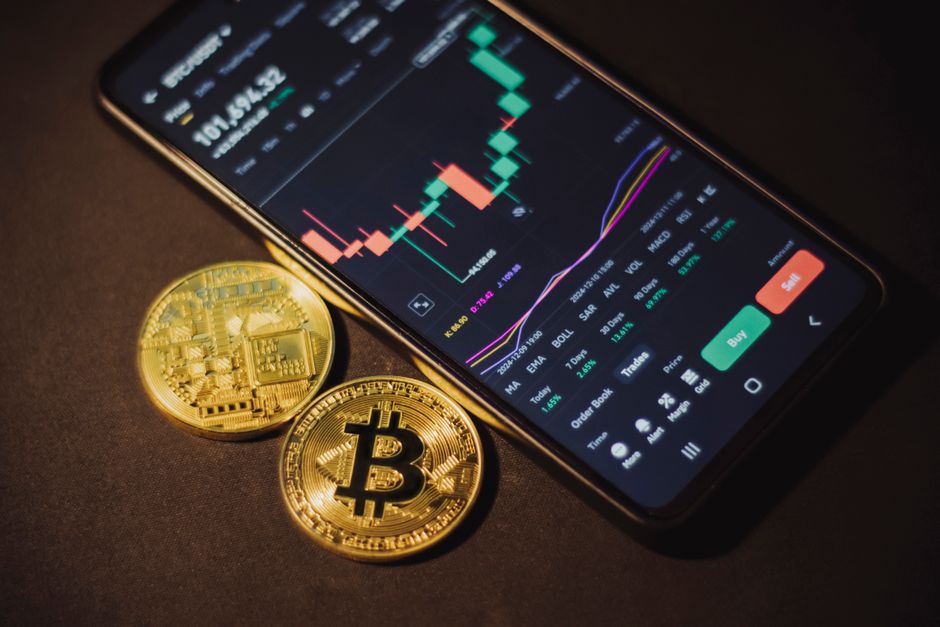
For many Americans, managing money feels like a constant balancing act. You’re trying to save for retirement, maybe a down payment on a house, or even just build up an emergency fund. You hear a lot about traditional investments like stocks and bonds, and perhaps you’ve dipped your toes into mutual funds or ETFs. But then there’s Bitcoin, a digital currency that seems to be constantly in the news, often with headlines that swing wildly between “revolutionary” and “risky.” It’s natural to wonder if this new kid on the block has a place in your carefully constructed financial future.
Understanding how something as new and volatile as Bitcoin might fit into your existing investment strategy can feel daunting. You’ve worked hard for your money, and the last thing you want to do is make an impulsive decision based on hype. The good news is that approaching Bitcoin, like any other investment, with a clear strategy and an understanding of its unique characteristics can help you make informed choices that align with your personal financial goals. It’s not about jumping on a bandwagon, but rather about thoughtfully considering how this digital asset might complement or complicate your path to financial well-being.
Understanding Bitcoin: More Than Just Digital Cash
At its core, Bitcoin is a decentralized digital currency, meaning it operates without a central bank or single administrator. Transactions are recorded on a public ledger called a blockchain, and new bitcoins are created through a process called “mining.” This decentralization is a key feature, as it aims to remove intermediaries and give users more control over their money.
Unlike traditional currencies issued by governments, Bitcoin’s supply is limited to 21 million coins, a scarcity that some proponents believe gives it long-term value. It’s often referred to as “digital gold” due to this scarcity and its potential as a store of value, similar to how physical gold has been used for centuries.
Key Characteristics of Bitcoin
- Decentralization: No single entity controls Bitcoin. This offers a different risk profile than assets tied to specific governments or corporations.
- Scarcity: A fixed supply of 21 million bitcoins means it’s a deflationary asset, unlike fiat currencies which can be printed indefinitely.
- Volatility: Bitcoin’s price can fluctuate significantly over short periods. This is a crucial factor for investors to consider.
- Global Accessibility: Bitcoin can be sent and received anywhere in the world with an internet connection, often with lower fees than traditional international money transfers.
- Pseudonymity: While transactions are public on the blockchain, the identities of the users behind the wallet addresses are not directly revealed.
Why Consider Bitcoin for Your Diversified Investment Portfolio?
Diversification is a cornerstone of sound investment strategy. The idea is to spread your investments across different asset classes to reduce overall risk. If one asset performs poorly, others might perform well, cushioning the blow to your total portfolio. So, where does Bitcoin fit into this picture?
Some investors see Bitcoin as a potential diversifier because its price movements don’t always correlate with traditional assets like stocks and bonds. This means that when the stock market is down, Bitcoin might not necessarily follow the same trend, or vice-versa. This non-correlation, if it holds true over time, could potentially reduce overall portfolio volatility.
Another argument for including Bitcoin is its potential for significant growth. While past performance is no guarantee of future results, Bitcoin has experienced substantial price appreciation since its inception. For those with a higher risk tolerance and a long-term outlook, a small allocation to Bitcoin could offer an upside potential that’s different from more mature asset classes.
Furthermore, Bitcoin represents an emerging technology and a new financial paradigm. Investing in it can be seen as an investment in the future of decentralized finance and digital assets. As more institutions and individuals adopt it, its utility and perceived value could increase.
The Risks and Considerations of Bitcoin
It’s equally important to acknowledge the significant risks associated with Bitcoin. Its notorious volatility means that its value can drop dramatically in a short period, leading to substantial losses if you need to sell at an inopportune time. This makes it unsuitable for money you might need in the short term, such as an emergency fund.
Regulatory uncertainty is another major factor. Governments around the world are still grappling with how to regulate cryptocurrencies, and changes in laws could impact Bitcoin’s value and usability. Security risks, such as hacking of exchanges or personal wallets, also exist, though these can be mitigated with proper security practices.
Finally, the underlying technology, while robust, is still relatively new compared to traditional financial systems. There’s always a possibility of unforeseen technical issues or competition from other digital assets.
Actionable Steps for Integrating Bitcoin into Your Portfolio
If you’re considering how Bitcoin fits into a diversified investment portfolio, here are some concrete steps to take:
1. Define Your Risk Tolerance and Financial Goals
Before even thinking about buying Bitcoin, honestly assess your personal risk tolerance. Are you comfortable with the possibility of seeing your investment value drop by 30%, 50%, or even more, in a short period? Bitcoin is not for the faint of heart or for those who need predictable returns.
Next, clarify your financial goals. Are you investing for retirement decades away, or for a goal in the next five years? Bitcoin is generally considered a long-term, speculative investment. If your goals are short-term or require capital preservation, Bitcoin might not be appropriate. Only invest money you can truly afford to lose without impacting your financial security.
2. Start Small and Allocate a Small Percentage
A common recommendation for speculative assets like Bitcoin is to allocate only a very small percentage of your total investment portfolio – typically 1% to 5%. This “play money” approach allows you to participate in the potential upside while limiting your downside risk if the investment doesn’t perform as hoped. For example, if you have a $100,000 portfolio, a 2% allocation would mean investing $2,000 in Bitcoin. This small allocation is unlikely to derail your entire financial plan if Bitcoin’s value plummets, but it could still provide meaningful growth if it performs well.
This strategy aligns with the principles of diversification: you’re adding an asset that behaves differently, but you’re not overexposing yourself to its unique risks. Think of it as a small, high-octane component in a larger, more stable machine.
3. Choose a Reputable Exchange and Secure Your Investment
If you decide to invest, selecting a trustworthy cryptocurrency exchange is crucial. Look for exchanges with a strong track record, robust security measures (like two-factor authentication), transparent fee structures, and good customer support. Some popular options in the U.S. include Coinbase, Kraken, and Gemini. Research reviews and ensure the exchange is regulated in your jurisdiction.
Once you purchase Bitcoin, consider how you will store it. Leaving significant amounts of Bitcoin on an exchange carries inherent risks, as exchanges can be targets for hackers. For larger holdings, consider transferring your Bitcoin to a “hardware wallet” (a physical device that stores your private keys offline) or a “software wallet” (an application on your computer or phone) where you control the private keys. Understanding and implementing strong security practices is paramount to protecting your digital assets.
4. Practice Dollar-Cost Averaging
Given Bitcoin’s volatility, trying to “time the market” by buying when you think the price is lowest is extremely difficult and often leads to poor outcomes. A more prudent approach is dollar-cost averaging (DCA). This involves investing a fixed amount of money at regular intervals (e.g., $50 every two weeks, or $200 every month), regardless of Bitcoin’s price.
When the price is high, your fixed amount buys fewer bitcoins; when the price is low, it buys more. Over time, this strategy can help smooth out the impact of price fluctuations and reduce your average cost per bitcoin. It takes the emotion out of investing and encourages a disciplined, long-term approach.
5. Stay Informed and Rebalance Periodically
The world of cryptocurrency is dynamic and constantly evolving. Stay informed about major developments, regulatory changes, and technological advancements. Follow reputable news sources and educational platforms. However, be wary of hype and “get rich quick” schemes.
Periodically review your overall portfolio, including your Bitcoin allocation. If Bitcoin’s value surges, it might grow to represent a larger percentage of your portfolio than you initially intended. In such cases, you might consider “rebalancing” by selling some Bitcoin to bring it back to your target allocation and reinvesting those funds into other asset classes, or simply taking profits. Conversely, if its value drops significantly, you might choose to buy more (if it aligns with your strategy and risk tolerance) or simply hold. The key is to have a plan and stick to it, rather than reacting emotionally to market swings.
Bitcoin in Your Financial Toolkit
Bitcoin, with its unique characteristics and potential, can be a fascinating addition to a well-considered and diversified investment portfolio. It’s not a magic bullet, nor is it a replacement for traditional financial planning. Instead, it’s an asset that, when approached with caution, education, and a clear understanding of its risks and rewards, can play a specific role.
For everyday Americans building their wealth, the question isn’t whether to go “all in” on Bitcoin, but rather how Bitcoin fits into a diversified investment portfolio in a way that aligns with personal financial goals and risk tolerance. By taking a thoughtful, strategic approach – starting small, practicing dollar-cost averaging, and prioritizing security – you can explore its potential without jeopardizing your overall financial stability. What are your thoughts on integrating digital assets into your long-term financial strategy?