You’re scrolling through your 401(k) statement on a Tuesday morning when you notice the market took a dip overnight. You see headlines about conflict in the Middle East, shipping disruptions, and energy prices spiking. Your first instinct? Panic. But here’s what most investors get wrong: geopolitical events are supposed to affect markets, and understanding how they work is the best defense against making emotional decisions that hurt your long-term wealth.
The truth is, regional tensions—especially those involving critical shipping lanes and energy infrastructure—create real ripples through global markets. That’s not a reason to sell everything. It’s actually a reason to understand why certain assets move the way they do, and how a diversified portfolio is already built to weather these storms.
Let’s walk through how geopolitical risk actually flows into your investments, and what savvy investors do about it.
Why Energy and Shipping Disruptions Matter to Your Portfolio
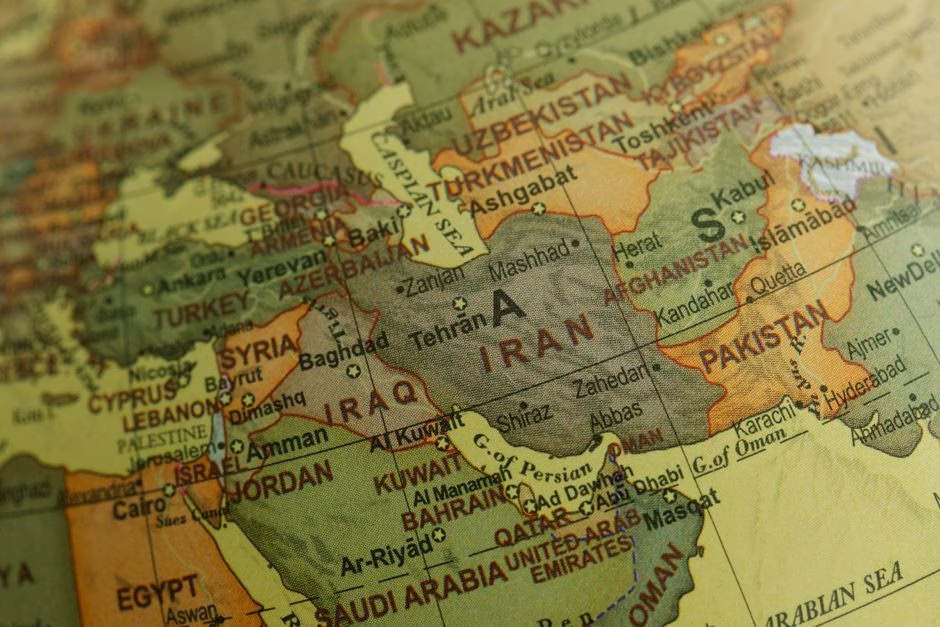
When a major shipping chokepoint—like the Strait of Hormuz, through which roughly 20% of the world’s oil passes—faces renewed threats, investors get nervous. That nervousness usually shows up in three places: oil and energy stocks spike, safe-haven assets like Treasury bonds become more attractive, and growth stocks sometimes soften as traders worry about inflation and economic slowdown.
But here’s the thing: your portfolio doesn’t live in a vacuum. If you own a total market index fund or a target-date fund in your 401(k), you already own pieces of energy companies, financial firms, and manufacturers. When tension rises, some of those holdings benefit (energy stocks), while others may pause (airlines, shipping companies). The diversification is already doing its job—pulling in different directions.
The mistake most beginners make is treating a 2-3% market correction as a signal to get out. They sell low, realize later that the market recovered, and end up worse off than if they’d simply held on.
How Different Investment Types React to Geopolitical Risk
Stocks and equity funds are usually the most sensitive to geopolitical headlines. Energy stocks can rally (higher oil prices boost profits), but airlines and consumer discretionary stocks may slide. International stocks tied to the affected region often get hit first. A broad U.S. stock index fund, though, smooths out those moves across hundreds of companies.
Bonds and Treasury securities often move the opposite direction from stocks during geopolitical stress. When investors panic, they move money into U.S. Treasury bonds, which are seen as the safest place on Earth. This actually pushes bond prices up and yields down. If you have a target-date fund that holds both stocks and bonds, this natural hedge is working automatically.
Commodity-linked investments (like funds tracking oil or natural gas) can become volatile. A shipping disruption genuinely threatens to reduce supply, which pushes prices higher. Some investors see this as a hedge; most should just recognize it and avoid overweighting commodities unless they truly understand the risk.
International developed markets may outperform or underperform depending on which countries are involved. But again, if you own a total international stock fund, you’re spread across dozens of nations, so no single crisis tanks your whole position.
Four Strategies to Keep Geopolitical Risk from Derailing Your Plans
Stay the course with your asset allocation
The single most powerful move you can make during geopolitical tension is to do nothing. Your 401(k), IRA, or brokerage account was built with a target allocation—maybe 80% stocks and 20% bonds if you’re younger, or 60/40 if you’re closer to retirement. That mix was designed to handle volatility. When stocks drop and bonds hold steady, your allocation naturally rebalances itself toward your original targets.
Selling stocks when they’re down and geopolitical news is scary means you’re locking in losses and moving into bonds after they’ve already risen. That’s the opposite of buy low, sell high.
Dollar-cost average through volatility
If you’re still contributing to your 401(k) or IRA regularly—which you should be—you’re automatically buying stocks on both high-price days and low-price days. On the day the market drops 3% due to Hormuz headlines, your $500 contribution buys more shares than it would have a week earlier. Over years, this smooths out your cost basis and removes emotion from the equation.
This is why people who “time out” of the market and wait for calm often miss the recovery. The recovery happens during the uncertainty, not after.
Rebalance once a year, not once a week
Pick a calendar date—maybe January 1st or your birthday—and rebalance your portfolio back to your target allocation. If stocks have done really well and now make up 85% of your portfolio instead of 80%, sell a small amount and buy bonds to get back to 80/85. If stocks have dropped and now represent 75%, buy stocks and reduce bonds.
This forces you to sell high and buy low in a completely systematic way. It’s the opposite of panic selling.
Avoid concentration in any single sector or country
If 30% of your portfolio is in energy stocks because you thought they’d be a great hedge against Middle East tension, that’s a risk that could genuinely hurt you. But if you own a total market index fund, energy is only about 4-5% of your holdings. That’s the right size for a hedge without being a bet.
The same goes for international exposure. Own a broad developed-market fund or a total world stock fund. Don’t try to pick which countries will be “safe” during conflict—that’s market timing with extra steps.
The Mistake That Costs Investors Real Money
Here’s what happens too often: tension rises, headlines get scarier, and investors convince themselves this time is different and a crash is coming. They sell 20-30% of their stock holdings and move into cash or bonds. For six months or a year, they feel smart because they “dodged” the volatility.
Then the geopolitical situation cools, markets rally 15%, and they’re sitting on the sidelines while everyone else recovered. Now they face a choice: buy back in at higher prices, or stay out and miss the next move. Most stay out, locked in a loss of 15% they could have avoided entirely.
The math is brutal. If you own $100,000 in stocks and move it to cash at the bottom, then miss a 20% recovery, you’ve lost $20,000 in upside. You didn’t just lose 20% of the drop—you lost 20% of the recovery too.
What Geopolitical Risk Actually Teaches You About Investing
Ironically, events like shipping disruptions and regional tensions are proof that diversification works. When one part of the world or one sector is under stress, other parts keep growing. That’s the entire point of owning a broad index fund instead of betting on five stocks.
It’s also why you shouldn’t try to be a geopolitical expert and use headlines to pick stocks. Professional traders with teams of analysts and real-time data struggle to profit from geopolitical moves. You won’t beat them by reading the news and making emotional trades.
Your job as an investor is simpler: build a diversified portfolio aligned with your time horizon and risk tolerance, contribute regularly, and let compound growth do the work over decades. Geopolitical events are just noise in that long-term signal.
Your Move Today
Pull up your 401(k) or IRA statement right now and look at your allocation. Are you invested in a target-date fund that matches your expected retirement year? Does it have a mix of stocks and bonds that feels right for your situation? If yes, close the app and don’t open it again for a quarter. That’s the move.
If you’re in individual stocks or sector-heavy funds and geopolitical news is making you anxious, it might be time to talk to a financial advisor about rebalancing into broader index funds. You don’t need to predict the future—you just need a plan you can stick with when things get scary.
What’s your biggest worry about geopolitical events affecting your investments—let’s talk about it in the comments.