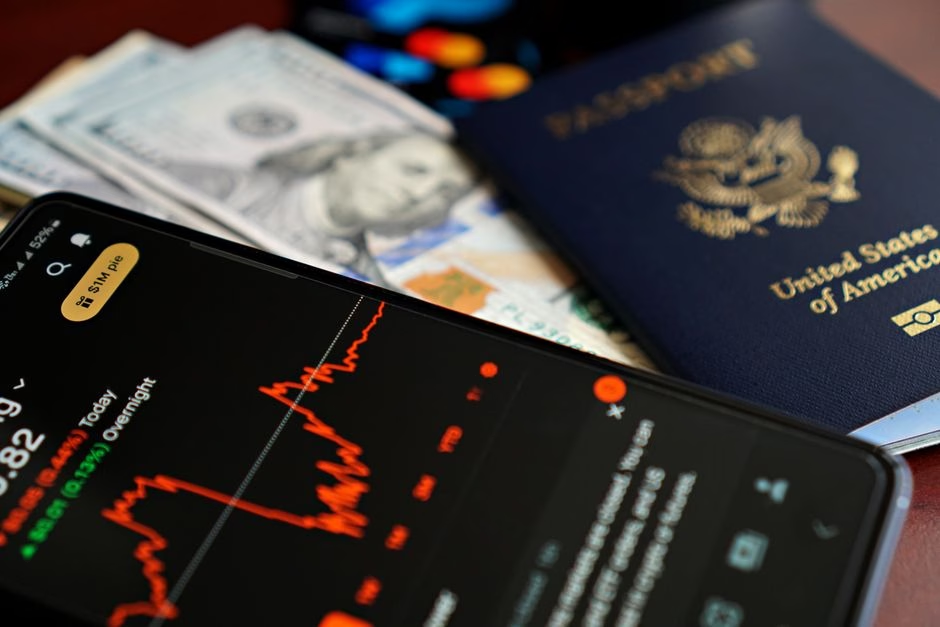
You’re scrolling through your phone, and suddenly you see “Iran economy” trending. Your first thought probably isn’t about your retirement account—but it should be. When major global economies show signs of stress, American investors often feel the ripple effects in their portfolios within days or weeks. Understanding how international economic turmoil influences your investments is one of the most underrated wealth-building skills you can develop.
This article breaks down why global economic events matter to your money, how they affect different types of investments you likely own, and exactly what you should—and shouldn’t—do when headlines get scary.
Why U.S. Investors Care About Foreign Economies
American investors often assume that international problems stay overseas. That’s not how modern markets work. Here’s the reality: U.S. companies earn roughly 40–50% of their profits from international sales. When major regions face economic pressure—whether through sanctions, political instability, currency collapse, or recession—American corporations feel the pain almost immediately.
When you own a diversified portfolio with index funds, mutual funds, or individual stocks, you’re likely exposed to global economic trends whether you realize it or not. Your S&P 500 fund holds companies that depend on Chinese manufacturing, European sales, Middle Eastern oil, and countless other international connections. One unstable economy doesn’t cause a crash, but it can trigger market volatility—and that’s when many investors make expensive mistakes.
How Global Instability Affects Different Parts of Your Portfolio
Energy and Commodity Stocks Take the Biggest Hit
Energy prices move fast when geopolitical tension rises. Oil, natural gas, and precious metals become more expensive or unpredictable. If you hold energy sector stocks, oil futures, or commodity ETFs, you’ll typically see price swings before other sectors feel the pressure.
But here’s the counterintuitive part: higher energy costs hurt most American consumers and companies. Airlines, manufacturers, and retailers all see margins shrink when fuel and materials get expensive. So while an energy stock might spike short-term, your broader portfolio may decline because most companies in your holdings are net consumers of energy, not producers.
Multinational Corporations Feel Pressure on Earnings
Companies like Apple, Microsoft, Coca-Cola, and Ford earn massive chunks of revenue abroad. Economic weakness in a major region means lower sales, delayed orders, or supply chain disruptions. When earnings guidance drops, stock prices follow. This is why you might see a sudden dip in your 401(k) balance even though nothing changed domestically.
The delay between a global economic shock and a stock price decline can range from hours to weeks. That’s why you see markets react so fast to international news—millions of investors and trading algorithms are processing the same information simultaneously.
Interest Rates and Bond Prices Shift
When global risk increases, investors flee to safety. That means money flows into U.S. Treasury bonds and away from stocks. Higher demand for bonds pushes Treasury prices up and yields down—which is generally good news if you hold bonds. But it’s also a sign that investors are nervous, which often precedes stock market weakness.
If your portfolio has a bond allocation (which it should if you’re not decades away from retirement), bonds can act as a cushion during downturns. But keep in mind: rising interest rates do the opposite—they make existing bonds worth less. The relationship between international economic stress and U.S. interest rates isn’t simple, which is why financial planning matters.
Common Mistakes Investors Make During Global Uncertainty
Panic selling is the biggest wealth-destroyer. When markets dip 5–10% on scary headlines, many investors sell their entire position, lock in losses, and then watch the market recover without them. This is mathematically almost guaranteed to underperform a buy-and-hold strategy over any five-year period.
The second mistake is overconcentration in a single stock or sector. If you have 30% of your portfolio in tech stocks, a global tech supply-chain shock hits you much harder than someone with a diversified mix of index funds.
A third trap is checking your portfolio obsessively. The more often you look, the more volatility you see, and the more tempted you are to make emotional decisions. Consider checking your long-term investments quarterly or annually, not daily.
What to Actually Do When Global Economic News Breaks
Zoom Out and Check Your Allocation
Your investment strategy should be built for volatility. That means deciding in advance what percentage of your portfolio goes into stocks, bonds, and cash—and sticking to that mix regardless of headlines.
If you’re 25 years from retirement, 85–90% stocks and 10–15% bonds is typically appropriate. If you’re 10 years out, something like 60% stocks and 40% bonds might make more sense. The exact split depends on your risk tolerance and goals, but the point is: you should have already decided this before the scary headlines arrived.
When a geopolitical event happens, don’t change your allocation. If your portfolio has drifted away from your target (because stocks rose and bonds fell), you might rebalance—meaning you sell some winners and buy some losers to get back to your target mix. This is a disciplined, unemotional way to stay the course.
Keep Contributing to Retirement Accounts
This is perhaps the most powerful thing you can do during volatility. When markets drop, your regular 401(k) contributions (whether matched by your employer or not) buy shares at lower prices. Over a 20 or 30-year career, buying low during downturns massively amplifies your long-term wealth.
If you have a Roth IRA, HSA, or other retirement savings vehicle, market dips are actually gifts—they let you build wealth more efficiently. Do not stop contributing because of global uncertainty.
Diversify Across Asset Classes and Geography
Your core portfolio should include:
- U.S. stock index funds (the broadest option is a total U.S. market fund)
- International stock index funds (developed markets like Europe and Japan, plus emerging markets)
- Bond index funds (mix of short and intermediate-term bonds)
- A small cash cushion (3–6 months of expenses in a high-yield savings account)
This mix means no single economy or sector can sink your entire financial plan. When emerging markets struggle, developed-market bonds may rise. When U.S. stocks dip, international stocks might hold steady. Perfect diversification doesn’t exist, but broad diversification across geographies and asset classes is the closest thing to a free lunch in investing.
Avoid the “Doom Loop” Media Trap
Financial media profits from fear. When global economic stress hits, news outlets run endless coverage with dramatic language designed to grab attention. This coverage is often accurate about what happened, but it’s terrible at predicting what happens next. No serious investor has ever made money by trying to time markets based on headlines.
Your job is simpler: maintain your strategy, stick to your allocation, and keep investing. The people who made money during past crises weren’t the ones who predicted the crisis correctly. They were the ones who kept buying while everyone else panicked.
Why This Matters More Than You Think
Economic stress abroad tends to create buying opportunities at home. The best wealth-builders in history built their fortunes by staying calm when everyone else was scared. During the 2008 financial crisis, the 2020 pandemic crash, and countless other downturns, investors who kept their allocation and kept contributing ended up massively ahead of those who fled to cash.
Global economic uncertainty is constant. At any moment, some region is facing inflation, recession, currency crisis, or political upheaval. If you make big investment decisions every time something scary happens internationally, you’ll be constantly reacting—and constant reactions are wealth-killers.
The real strategy is boring: build a diversified portfolio matched to your goals and timeline, automate your contributions, rebalance occasionally, and then mostly ignore the news cycle. This approach has never failed over any 10-year period in modern market history.
Your next move is simple. If you haven’t reviewed your 401(k) allocation in the last year, do that this week. If you’re not sure what your mix of stocks and bonds should be, use your age as a rough starting point: try (110 minus your age) as a percentage in stocks. If you’re not contributing to retirement accounts yet, start now—and increase contributions if you can. Global uncertainty makes automatic investing more powerful, not less.
The headlines will come and go, but your disciplined, boring investment strategy will keep working in the background, building wealth one paycheck at a time.
What’s your current portfolio allocation, and does it match your actual risk tolerance? Drop a comment below—I’d love to hear what you’re thinking during uncertain times.