If you’ve noticed Grab Holdings Limited (GRAB) popping up in your investment news feed or on Yahoo Finance’s trending list, you’re not alone. Right now, U.S. investors are actively searching for information about this Southeast Asian ride-hailing and delivery company—and its stock price has taken a noticeable dip. But here’s the thing: understanding why a stock trends tells you way more than the trend itself. It teaches you how markets actually work, and that knowledge matters whether you’re building a diversified portfolio or just trying to stay financially literate in a connected global economy.
This article breaks down the forces that typically move a stock like GRAB and explains what kinds of headlines and market shifts get investors’ attention. We’re not here to tell you whether to buy or sell—that’s between you and your financial advisor. Instead, think of this as investing education that helps you read the market like a pro.
What Actually Drives Investor Interest in a Trending Stock
When a stock suddenly shows up everywhere, it’s rarely random. Something has shifted. It could be company earnings that just came out, a news story about the industry, a change in the broader market, or even social media chatter among retail investors. The key is learning to spot the difference between real, fundamental reasons to care about a stock and pure noise.
For a stock like GRAB—which operates in Southeast Asia and serves millions of users daily through ride-hailing, food delivery, and financial services—several categories of events typically spike investor searches:
Earnings reports and guidance changes. When a company releases quarterly earnings, investors want to know: Did the company make money? Is it growing? Is management optimistic or cautious about the future? A surprise miss or a revised forecast can trigger sudden buying or selling pressure.
Sector-wide trends. Ride-hailing and delivery platforms don’t operate in isolation. If you see big moves in competitors like Uber or Lyft, or regulatory changes affecting gig economy companies, that news ripples across the entire sector.
Geopolitical or macroeconomic shifts. Emerging market stocks are sensitive to currency fluctuations, interest rate changes, and regional economic news. If the U.S. Federal Reserve raises rates or tensions rise in Asia, international stocks often feel the impact faster than domestic ones.
Analyst upgrades or downgrades. When a major investment bank changes its rating on a stock or adjusts its price target, that’s newsworthy enough to draw retail investor attention.
The Recent Price Movement: What You Should Know
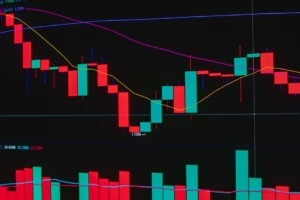
GRAB is currently trading around $3.25 per share on the Nasdaq, down roughly 8% in a single trading day and down about 6% over the past week. That’s a meaningful move in a short timeframe, and it’s enough to catch people’s attention.
When a stock falls that hard in one day, it usually signals that something specific happened—not just general market weakness. This could be:
- A disappointing earnings announcement or lowered guidance
- Negative coverage from analysts or media outlets
- Broader sector selloff affecting all ride-hailing or fintech stocks
- Macro headwinds hitting emerging market stocks generally
- Company-specific news like executive departures, regulatory issues, or competitive pressure
Without digging into the specific news of today, we can’t say exactly which factor (or combination of factors) is moving GRAB right now. But the size of the move tells us that the market is repricing its expectations about the company’s future.
Why U.S. Investors Care About a Southeast Asian Stock
You might be wondering: why should I, sitting in America, pay attention to a ride-hailing app that operates primarily in Indonesia, Thailand, Singapore, and the Philippines?
Fair question. Here are the real reasons:
Diversification and international exposure. Many American investors—especially those with 401(k)s and IRAs—hold international index funds or ETFs that own stocks like GRAB. If you own a broad emerging markets fund, you’re likely holding a slice of this company whether you realized it or not. Understanding what moves GRAB helps you understand what’s happening inside those holdings.
Growth story appeal. Emerging markets represent billions of people gaining access to smartphones, internet, and financial services for the first time. Companies that serve those markets scale faster than mature U.S. companies. That growth potential attracts investors seeking higher returns, even if the risk is higher too.
Fintech and payments innovation. GRAB isn’t just a ride-hailing app anymore. It offers digital wallets, insurance, and lending services across Southeast Asia. For investors tracking the global fintech revolution, companies like this are laboratories for how financial services evolve in cash-heavy, underbanked regions.
Portfolio concentration risk. If you work for a major tech company or hold a lot of U.S. tech stocks, an emerging market play like GRAB offers genuine diversification away from the Nasdaq-heavy returns that dominated 2023-2024.
The Emerging Market Context: Why GRAB Moves Differently Than U.S. Stocks
A stock trading on the Nasdaq but headquartered and operating in Southeast Asia faces a unique set of forces. Understanding what moves big tech stocks can help, but GRAB’s story is different in important ways.
Currency risk. GRAB earns revenue in Indonesian rupiah, Thai baht, Philippine peso, and Singaporean dollars—not U.S. dollars. When the dollar strengthens, earnings from those countries become worth less when converted back to dollars. That’s not a company problem; it’s a currency problem. But it still hits your returns.
Regulatory uncertainty. Ride-hailing and fintech companies in developing economies navigate rapidly changing regulations. One country might suddenly impose stricter pricing rules, or a government might decide to regulate digital payments differently. U.S. tech companies face regulation too, but GRAB deals with it across five or six different jurisdictions simultaneously.
Profitability expectations. U.S. investors got used to big tech companies being insanely profitable. GRAB is still investing heavily in growth and market share in competitive regions. It may never reach Apple-like profit margins. Market sentiment shifts depending on whether investors are willing to accept growth at the expense of near-term profits.
Valuation cycles. Emerging market stocks trade in and out of favor with global investors. When interest rates rise, money flows back to “safer” U.S. companies. When rates fall, international growth stocks rally. These cycles can be dramatic and feel disconnected from company fundamentals.
How Stock Price Moves Happen (And Why Timing Isn’t Everything)
When a stock drops 8% in one day, it can feel like a crash. But zooming out, here’s what’s actually happening:
A stock’s price is just the meeting point between buyers and sellers at any given moment. When more people want to sell than buy, the price goes down until the price gets low enough that buyers return. That repricing happens instantly in liquid stocks. GRAB trades millions of shares daily, so the market digests news and adjusts the price within minutes or hours.
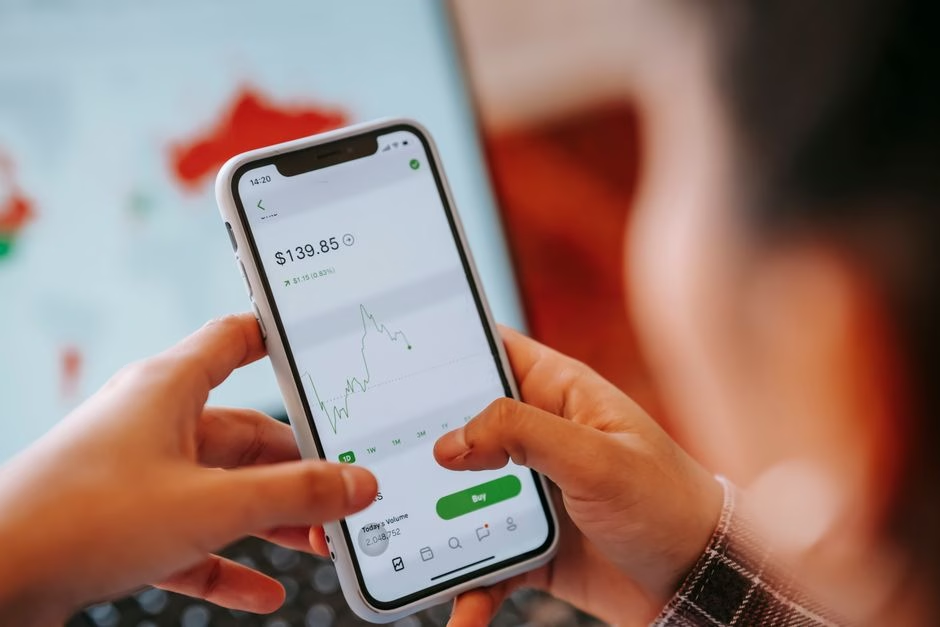
The tricky part for regular investors: you often can’t control when you see the news. If you logged into your brokerage app and saw GRAB down 8%, you’re seeing the stock after the repricing already happened. That’s completely normal and okay. It’s why long-term investing in diversified funds tends to work better than trying to trade trending stocks.
What Should You Do If You Own GRAB or Are Thinking About It
If GRAB is already in your portfolio—perhaps through an emerging markets ETF or because you bought it directly—don’t panic. One day’s move, or even one week’s move, shouldn’t change a long-term investment plan. Ask yourself:
- Why do I own this? If it’s part of a diversified emerging markets allocation, the thesis hasn’t changed based on one day’s news.
- Do I have new information that changes my view? If you learn something genuinely material (like a major scandal or regulatory ban), that’s different from normal market volatility.
- Is this still appropriate for my risk tolerance and time horizon? If you need the money in the next two years, individual stocks—especially emerging market ones—are risky. If you’re 20+ years from retirement, short-term moves matter less.
If you’re considering buying GRAB now because it’s “down,” remember that value isn’t the same as a bargain. A stock can fall because the company’s prospects genuinely worsened. Falling price doesn’t automatically mean it’s cheaper in the economic sense.
The Bigger Picture: Staying Informed Without Getting Addicted to Trending Stocks
Here’s the hard truth: most of us shouldn’t be checking individual stock charts daily. The psychological pull is real—trending stocks feel exciting and feel like opportunities. But research consistently shows that frequent trading and chasing trends erodes returns rather than improving them.
Instead, try this approach:
Build a portfolio you understand. Know what you own and why. If you’re in low-cost index funds—like total stock market funds, total bond funds, and international funds—you own pieces of hundreds of companies. That’s fine. You don’t need to track each one.
Check in quarterly or annually. Rebalance if needed. Let compounding work. Your 401(k) or IRA is set up exactly for this reason.
Read trend news for education, not action. When you see GRAB or any other stock trending, use it as a teaching moment. Ask: What sector is this? What moves stocks in that sector? How does this fit into the global economy? That curiosity makes you a smarter investor without requiring you to trade.
Separate your “long-term portfolio” from any “play money.” If you want to learn about individual stocks and test your ideas, open a small account with money you can afford to lose. Keep it small—maybe 5% of your investable assets—and treat it as tuition in financial education, not retirement savings.
The Bottom Line
GRAB is trending because something shifted in the market’s assessment of the company or sector. Whether it’s earnings, regulation, competition, or macro forces, the move is real and it matters to people who own the stock. But for most American investors, the lesson isn’t “should I buy GRAB?” It’s “how do I think clearly about investing in a world where stocks trend constantly?”
The answer involves building a boring, diversified portfolio, staying curious about what moves different sectors, and accepting that you’ll never time every trend perfectly—and you don’t need to. Consistency beats cleverness in investing. Markets are efficient enough that trying to outsmart them usually makes you poorer, not richer.
Start by auditing your current holdings. Do you know what you own? Do you understand why? If not, that’s your first action item today.