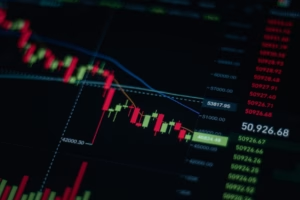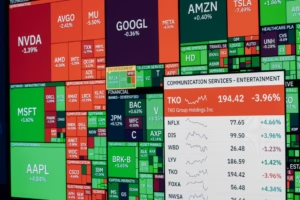
You open your brokerage app on a quiet Tuesday afternoon, scan the trending tickers, and stop in your tracks. A leveraged fund like the Leverage Shares 2X Long SPCX Daily ETF (SPCH) is suddenly lighting up search boards, down more than 11% in a single trading session and shedding over 6% across just five days. When a ticker flashes a steep double-digit drop, human psychology kicks in immediately: is this an oversold bargain waiting for an aggressive rebound, or a falling knife?
Before jumping at an apparent discount, taking a step back to understand the mechanics is critical. Exploring the risks of 2x leveraged etfs for everyday investors reveals why these specialized financial instruments behave so differently from traditional index funds and why sharp daily plunges are a feature of their design rather than an unexpected glitch.
When exotic or leveraged products dominate financial news and search rankings, it rarely signals a quiet, predictable buying opportunity. Instead, it usually means elevated volatility, shifting underlying market sentiment, and aggressive short-term trading. Here is an educational breakdown of how 2X leveraged ETFs function, why they trend during volatile market cycles, and how everyday investors should view them within a balanced financial strategy.
What Causes a Leveraged Product Like SPCH to Trend?
Financial platforms like Yahoo Finance and StockTwits track what retail investors are searching for in real time. When an exchange-traded fund (ETF) experiences an abrupt double-digit percentage move, search volume naturally surges.
Investors tend to search for specific tickers for three distinct reasons:
- Sudden Price Dislocation: An intraday drop exceeding 10% immediately flags automated screeners and catches the attention of contrarian swing traders seeking a quick bounce.
- Curiosity Around Obscure Names: Many casual investors recognize broad market trackers like the S&P 500 or the Nasdaq-100, but when a niche product like SPCH appears on top-loser boards, people search to understand what asset class the fund actually tracks.
- Discussion Board Speculation: Online communities frequently amplify moves in volatile tickers, sparking debates between traders trying to catch a bottom and those warning of further downside.
However, high search volume is simply a reflection of market attention. It does not mean institutional money managers are accumulating shares, nor does it guarantee that a rebound is around the corner.
The Inner Mechanics: How 2X Daily Leverage Actually Works
To understand why a fund can drop 11% in a single day while the broader market experiences a much smaller decline, you have to look under the hood. Leveraged ETFs do not operate like standard mutual funds or buy-and-hold index trackers.
A standard index ETF buys and holds the underlying stocks that comprise its benchmark. If the benchmark rises 1%, the ETF rises approximately 1% (minus a tiny expense ratio).
A 2X leveraged ETF, by contrast, uses financial derivatives—principally total return swaps, futures contracts, and short-term debt—to amplify the daily performance of its target index by 200%. If the underlying benchmark moves up by 1% on Monday, the 2X fund aims to deliver a 2% gain before fees.
The danger lies on the downside. If that same target index slips by 5.5% on Tuesday, the 2X fund will drop roughly 11% that day. Because the fund resets its leverage on a daily basis, its performance over any timeframe longer than a single trading session can diverge radically from a simple “two times” multiple of the underlying index.
The Problem of Daily Rebalancing
At the end of every trading day, portfolio managers of leveraged funds must rebalance their exposure to maintain that exact 2X ratio for the following morning.
- When the market goes down, the fund must sell assets at lower prices to avoid being over-leveraged the next day.
- When the market goes up, the fund must buy additional exposure at higher prices to maintain its 2X target.
This process—frequently described by analysts as buying high and selling low—causes a mechanical drag that eats away at principal value whenever markets move sideways or encounter high volatility.
Volatility Drag: Why Compound Math Punishes Leveraged Holders
One of the most misunderstood concepts among retail investors is mathematical asymmetry, commonly called volatility drag or beta slippage.
Consider a simple mathematical exercise. If you invest $1,000 in an ordinary stock and it drops 10%, your account is worth $900. To get back to even, you need an 11.1% gain on that $900.
Now, look at what happens with daily 2X leverage:
- Day 1: An index drops 5%. A 2X leveraged fund drops 10%. Your initial $1,000 investment falls to $900.
- Day 2: The underlying index recovers all its losses, surging roughly 5.26% back to its original baseline.
- Day 2 for the Leveraged Fund: The 2X fund gains 10.52% (double the daily index move).
- The Result: A 10.52% gain on $900 brings your balance to just $994.68.
Even though the underlying benchmark fully recovered its losses in two trading sessions, the 2X leveraged fund remains in negative territory. When a market undergoes days or weeks of choppy, alternating green and red sessions, this decay accelerates dramatically. Over extended periods, a leveraged fund can lose substantial value even if the index it tracks ends up flat.
What Broad Factors Move Leveraged Funds?
When an instrument like SPCH suffers sharp consecutive declines, the drop is rarely random. Several macro and micro factors typically drive these aggressive repricings.
Benchmark Sector Realignment
Leveraged products tied to specific sectors, special-purpose vehicles, or thematic indices are highly sensitive to broader institutional capital flows. If large pension funds and asset managers trim exposure to high-growth or speculative pockets of the market in favor of defensive value stocks, the underlying index drops, and any 2X fund tracking it experiences a magnified decline.
Shifts in Interest Rate Expectations
Leveraged ETFs rely heavily on swap contracts and borrowed capital to generate leverage. When federal funds rates remain elevated, the cost of financing those derivative positions rises substantially. These borrowing costs are embedded directly into the fund’s daily net asset value (NAV), acting as a steady headwind against performance.
Earnings and Guidance Surprises
If the components within an ETF’s target index report quarterly earnings that fall short of Wall Street estimates, forward-looking guidance cuts can trigger rapid institutional de-risking. Because leveraged funds concentrate the impact of these selloffs, what might be a routine 3% pullback in an individual holding can trigger a cascading double-digit plunge in the leveraged wrapper.
Leveraged Trading vs. Traditional Wealth Building
Everyday investors looking to build long-term wealth must distinguish between financial instruments built for short-term tactical execution and those designed for multi-decade compounding.
Leveraged funds were originally engineered for institutional desks, hedge funds, and sophisticated day traders who want to express a high-conviction view over an intraday or single-week timeframe without using margin directly in their brokerage accounts. Both the Financial Industry Regulatory Authority (FINRA) and the Securities and Exchange Commission (SEC) have issued investor alerts warning that leveraged ETFs are unsuitable as buy-and-hold investments for retail accounts.
If your primary goal is growing a retirement nest egg inside a 401(k), Roth IRA, or standard brokerage account, consistency and low expenses are your greatest allies. Long-term strategies benefit from broad diversification, minimal turnover, and low expense ratios.
When broad market indexes stumble, taking advantage of a market decline through an unleveraged, low-cost broad fund like buying VOO during a market dip allows you to own real, profitable American businesses without fighting daily derivative reset decay. An unleveraged fund does not wipe out your capital simply because the path to recovery was volatile or prolonged.
The Most Common Mistake: “Averaging Down” on Leveraged Tickers
The classic retail investing mistake with trending, battered tickers is the instinct to “average down.”
Averaging down involves purchasing additional shares as the price drops to lower your average purchase price. While this strategy can work over multi-year horizons when buying broad, non-leveraged index funds or fundamentally sound blue-chip companies, it can be devastating when applied to leveraged daily ETFs.
Because daily compounding decay works continuously against leveraged funds during downturns, a fund that has fallen 50% does not simply need a 50% rebound to break even—it requires a 100% gain just to restore your starting balance. If the underlying asset spends months moving sideways or trending downward, the value of the leveraged fund can approach near-zero levels, leading to reverse stock splits just to keep the share price nominal.
Before committing capital to any ticker showing extreme volatility, run through these fundamental checkpoints:
Check the Fund Prospectus: Determine whether the fund explicitly states that its objective applies to a single day* rather than long-term holding periods.
- Review the Expense Ratio: Leveraged products carry annual management fees and swap financing costs that often exceed 1% or 2%, compared to less than 0.05% for broad index funds.
- Evaluate Your Liquidity Needs: Capital placed in speculative or leveraged instruments should never be money required for emergency funds, upcoming home down payments, or essential living expenses.
A Healthier Approach to Volatility
Market volatility is uncomfortable, but it is also completely normal. When single-day market movements push complex, leveraged instruments onto trending lists, the best reaction for most investors is curiosity rather than hasty action.
Use these moments as reminders to examine your broader financial plan. Verify that your asset allocation aligns with your genuine risk tolerance and your retirement timeline. Sustainable financial independence is rarely built by trying to time volatile 2X daily swings; it is achieved through persistent saving, deliberate diversification, and letting standard compound interest work in your favor over time.
Take a few minutes today to check your primary investment portfolio. Ensure that your core holdings consist of transparent, low-cost assets that you understand completely, and leave high-octane daily trading tools to the speculators who built them.
Have you ever monitored a leveraged ETF during a market drop, and how do you handle volatility in your own portfolio?