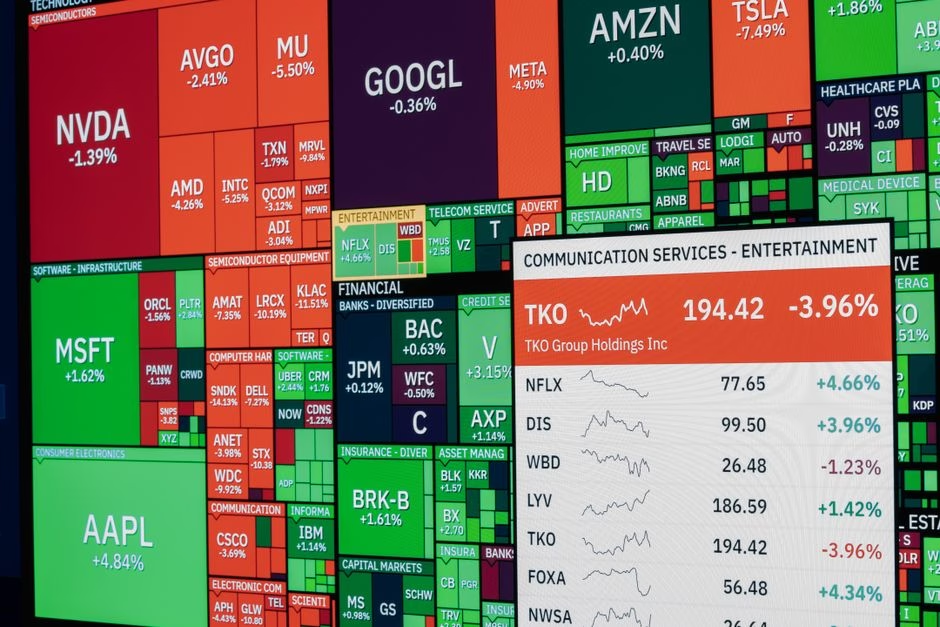
If you’ve noticed AT&T (ticker: T) popping up in your investment app or financial news feed lately, you’re not alone. The stock is trending hard among U.S. investors right now, up over 2% in recent trading days and drawing serious search volume on platforms like Yahoo Finance. But here’s what most busy Americans wonder: Should I care? And what actually moves a stock like this in the first place?
The truth is, understanding why a particular stock is trending—and what factors typically drive its price—is way more valuable than chasing the trend itself. AT&T is a classic example of a dividend stock, a category that attracts millions of American investors saving for retirement or building passive income. Learning what moves companies like this can help you make smarter decisions about your own portfolio, whether you own AT&T or not.
Let’s break down the real mechanics behind stock price movement and what you should actually know before making any moves with your own money.
Why Investors Watch Dividend Stocks Like AT&T
AT&T is one of the oldest and largest telecom companies in America, and it’s famous for one thing: reliability. The company pays shareholders a quarterly dividend—basically a slice of profits paid directly to you if you own the stock. That’s why it shows up in retirement portfolios, IRAs, and brokerage accounts all across the country.
When a dividend stock starts trending, there’s usually a reason. But it’s not always obvious, and it’s definitely not something you should act on without understanding the bigger picture.
Here’s the reality: AT&T trades on the New York Stock Exchange (NYSE) and is watched by millions of professional investors, algorithms, and regular people like you. When search volume spikes on Yahoo Finance or Google, it often means:
- Earnings announcements or guidance updates just dropped
- A sector-wide trend is affecting telecom companies
- Dividend news or policy changes were announced
- Broader economic data shifted investor sentiment toward stable, income-paying stocks
- Market volatility is driving people to safer, defensive holdings
None of these factors automatically mean the stock is a good or bad buy for you. But understanding which one is driving the move gives you context.
The Core Drivers of Stock Price Movement
When any stock moves up or down sharply, it’s almost always one of these fundamental factors at work. Let’s walk through each one so you know what to look for.
Earnings and Financial Performance
This is the heavyweight champion of stock price movers. When a company reports quarterly earnings, investors immediately compare:
- Revenue (total money coming in)
- Profit margins (how much of that revenue actually becomes profit)
- Guidance (what management says is coming next)
- Key metrics specific to the industry (for telecom, that’s subscriber growth, network investment, and cash flow)
For a company like AT&T, earnings matter because it determines whether the company can keep paying that dividend. If earnings disappoint, dividend investors get nervous. If they beat expectations or improve, the stock often rallies. You can learn more about how broader market moves affect dividend portfolios here.
Sector and Industry Trends
AT&T doesn’t exist in a vacuum—it’s part of the telecommunications sector. When the whole sector moves, individual stocks often follow. Recent trends affecting telecom include:
- 5G rollout progress and capital spending
- Fixed broadband competition from cable and fiber companies
- Wireless market saturation in the U.S.
- Inflation pressures on operating costs
- Interest rate changes that affect borrowing costs (telecom companies carry heavy debt)
If positive news hits the entire sector, AT&T benefits. If bad news emerges—like regulatory threats or competitive pressure—it gets dragged down alongside peers.
Interest Rates and the Macro Economy
Here’s something many newer investors miss: interest rates directly affect dividend stocks. When the Federal Reserve raises interest rates, bond yields go up. If you can suddenly get 5% guaranteed interest from a Treasury bond, a dividend stock paying 3.5% becomes less attractive. That sells pressure can push the stock down, even if the company’s fundamentals haven’t changed.
Conversely, when rates fall, dividend stocks often rally because they become the better income option again. If economic news suggests a recession is coming, investors often rotate toward stable, dividend-paying stocks and away from risky growth plays. This defensive movement can drive short-term rallies in stocks like AT&T.
Dividend Policy Changes
AT&T’s dividend is literally the reason millions of people own it. So any announcement about the dividend gets immediate attention:
- Dividend increase → stock usually rallies (shows confidence)
- Dividend cut → stock usually falls hard (signals trouble)
- Dividend maintained despite challenges → often seen as good news
- Buyback announcements → can support the stock price by reducing share count
If AT&T announced a dividend increase while you’re seeing it trending today, that’s a major reason for the move.
Market Sentiment and Flow
Sometimes stocks move for reasons that have nothing to do with fundamentals. When the broader market sells off hard, even solid dividend stocks get hit because investors need cash. When markets rally, money flows back into quality names like AT&T. Technical traders watching chart patterns or algorithmic traders hitting predetermined price targets can also create short-term momentum in either direction.
What Rising 2.35% in Five Days Actually Means
A stock up 2.35% over five trading days is a modest but meaningful move. It’s not a moon shot, and it’s not a crash. For context:
- It could be a genuine positive catalyst (earnings beat, dividend increase, sector rally)
- It could be a mean reversion after the stock had fallen recently
- It could be rebalancing flows (index funds buying it back to maintain weightings)
- It could be algorithmic trading or options-related hedging activity
The key question isn’t “Why is it up?” but rather “Is it up for reasons that affect my investing goals?” That’s the only question that matters to your wallet.
How to Think About This as a Personal Investor
If you’re sitting on AT&T stock already, a 2.35% gain is nice but shouldn’t change your long-term strategy. If you don’t own it and are considering buying because it’s “trending,” pump the brakes.
Here’s what actually matters:
For income seekers: Does AT&T’s current dividend yield and dividend growth rate fit your retirement income needs? Is the company healthy enough to sustain and grow that dividend?
For growth investors: Is AT&T positioned for long-term revenue and earnings growth, or are you buying a mature, slow-growth company?
For your overall portfolio: Do you already have exposure to telecom stocks? If you own a broad index fund or ETF, you already own AT&T. Buying it separately might mean doubling down unnecessarily.
For your risk tolerance: Telecom stocks are considered defensive and stable, but they still carry business risks. Does that fit your comfort level?
Trending doesn’t mean good. Popular doesn’t mean right for you. The fact that millions of other Americans are searching for AT&T stock means absolutely nothing about whether you should own it.
The Bottom Line: Do Your Own Homework
Stock prices move for real reasons—earnings, rates, sector trends, dividends, and economic conditions. Understanding what moves stocks is half the battle. The other half is deciding whether those moves matter to your specific financial situation.
If AT&T is trending today, great. That’s useful information. But before you buy, ask yourself: Am I buying this because the fundamentals are strong and it fits my plan, or because I saw it trending online? One decision builds wealth. The other builds regret.
Take fifteen minutes today to actually review why AT&T is moving. Read an earnings summary. Check the dividend history. Ask yourself if it belongs in your portfolio. That’s the work that separates thoughtful investors from trend chasers—and your retirement account will thank you for it.