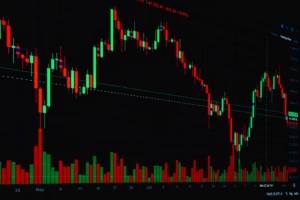
You’ve probably noticed a name or face trending on Google or social media lately, and your first thought wasn’t about markets—it was just curiosity. But here’s what most people miss: celebrity trends, viral moments, and sudden spikes in public interest can actually tell you something important about investor behavior and market psychology. If you’re building a real investment strategy, understanding why certain names trend and how that affects markets is surprisingly relevant to your money.
The truth is, trending names—whether they’re athletes, entertainers, or public figures—often correlate with stock moves, social media-driven trading, and retail investor behavior. And if you’re managing your own portfolio or thinking about getting into investing, this is a real-world lesson in how emotions and attention shape financial markets. Let’s break down what’s actually happening when something goes viral, and more importantly, how to protect your own money from reactive trading mistakes.
How Celebrity Attention Translates to Market Movement
When a public figure trends, it’s not usually because of their financial performance. It’s because of media coverage, social media buzz, or cultural moments. But here’s the disconnect that catches many investors off guard: that attention can create real money movement in stocks, cryptocurrencies, or other assets tied to that person or their ventures.
Retail investors—that’s you and millions of other Americans managing their own money—now have instant access to markets. A trending name on TikTok or Twitter can genuinely move stock prices within hours because retail trading volume has grown exponentially. This isn’t conspiracy; it’s a documented pattern that financial researchers have studied for years.
The risk here is simple: attention-driven trading is usually reactive, not strategic. When you buy something because it’s trending, you’re often buying near a peak, not at a genuine value opportunity. Professional investors call this FOMO trading—fear of missing out—and it’s one of the fastest ways to lose money on investments you didn’t thoroughly research.
The Psychology Behind Trending-Name Investing
Before you click “buy,” it helps to understand what’s actually happening in your brain when you see something trending and feel the urge to invest.
The availability heuristic is real. When a name is everywhere, your brain treats it as more important or more likely to succeed than it actually is. Seeing it mentioned 50 times in a day makes it feel safer, more proven, more like a sure thing. It isn’t. It just means more people are talking about it.
Social proof amplifies this. If thousands of other retail investors are buying, it feels like those people know something you don’t. They probably don’t. They’re experiencing the exact same psychological bias you are.
Recency bias makes recent events feel like lasting trends. A celebrity gets positive attention for a week, and suddenly it feels permanent. Markets don’t work that way. Sentiment shifts fast.
Here’s the hard truth: professional fund managers and institutional investors don’t base major decisions on trending topics. They analyze fundamentals, cash flow, competitive advantages, and long-term growth potential. That’s not exciting, but it’s why they consistently outperform retail traders who chase trends.
The Real Cost of Reactive Trading Decisions
Let’s talk dollars and cents, because this affects your actual wealth.
Every time you buy or sell a stock, you pay fees—whether it’s a flat commission, a percentage of the trade, or hidden costs in bid-ask spreads. These add up. If you make 10 trend-chasing trades a year instead of holding a diversified portfolio, you’re burning money on transaction costs alone.
But the bigger cost is opportunity loss. Time in the market beats timing the market, every study shows. If you’re moving money in and out based on what’s trending this week, you’re missing the long, slow wealth-building that happens with consistent, boring investing.
Then there’s the tax hit. Every time you sell an investment at a gain in a regular (non-retirement) account, you owe capital gains tax. Short-term gains—from holdings under a year—get taxed as ordinary income, which is significantly higher than long-term capital gains rates. Frequent trading in a taxable account can turn a modest gain into a taxable headache.
How to Spot a Legitimate Investment Opportunity vs. a Trend
The key skill here isn’t predicting what goes viral. It’s asking the right questions before you invest a single dollar.
Ask: Does this company or asset have real revenue and profit? Trending doesn’t mean profitable. Check the financial statements. If there’s no clear business model generating actual cash, you’re speculating, not investing.
Ask: Is the valuation reasonable? A growing company with a trendy name might still be overpriced. Compare the price-to-earnings ratio (P/E), price-to-sales ratio (P/S), or other valuation metrics to similar companies in the same industry. If the price is stretched far beyond competitors, you’re paying a “attention premium.”
Ask: Would I own this if nobody was talking about it? If the answer is no, that’s a red flag. You shouldn’t own an investment because it’s trending; you should own it because you believe in its fundamentals.
Ask: Can I hold this for at least three to five years without checking the stock price? If the thought of not looking at it for months makes you anxious, you’re over-leveraged or invested in something too speculative for your actual risk tolerance.
This is where many beginning investors stumble. Why penny stocks are trending one week and forgotten the next tells you everything about why chasing trending names is so dangerous—most don’t have the financial muscle to sustain value once attention fades.
Building an Actual Investment Strategy That Ignores Trends
The antidote to trend-chasing is a boring, proven system. And boring is exactly what you want.
Start with index funds or ETFs. An S&P 500 index fund holds 500 large companies, diversified across industries. No single trending name can sink your whole portfolio. The fees are low, and you’re not making emotional decisions every week. This is the foundation most professional advisors start with—not because it’s flashy, but because it works.
Use dollar-cost averaging. Instead of dumping money in all at once, invest a fixed amount every month. This removes the pressure to time the market perfectly and automatically has you buying more shares when prices dip and fewer when they’re high. Over decades, this crushes trying to buy at the “perfect” moment.
Max out tax-advantaged accounts first. A 401(k), Roth IRA, or HSA gets preferential tax treatment. In 2024, you can contribute up to $23,500 to a 401(k) and $7,000 to a Roth IRA (or $8,000 if you’re over 50). These accounts protect your gains from annual taxes, letting compound interest work harder for you.
If you do buy individual stocks, limit it to 5-10% of your portfolio. Experts call this “core and satellite”—your core is diversified index funds, and your satellites are individual bets on companies you genuinely understand and believe in. This way, if one trendy stock bombs, it doesn’t wreck your long-term wealth.
The One Question That Stops Most Trend-Chasing Cold
Before you hit “buy,” ask yourself: “If this investment dropped 50% tomorrow, would I panic-sell, or would I hold it because I still believe in it?”
If your honest answer is “I’d panic,” then it’s not an investment you should own. You’re speculating with money you need, or betting on something you don’t actually understand.
Real investing means being able to stomach short-term volatility because you’re confident in the long-term fundamentals. That confidence only comes from actual research—not from how many times you saw a name trending on social media.
Your Next Move: Start Building Your Real Portfolio Today
Trending names will keep coming. Social media will keep buzzing. And every time, retail investors will chase. But you don’t have to be one of them.
Start this week by doing one of these three things:
- Open a Roth IRA if you don’t have one and fund it with $100 into a low-cost S&P 500 index fund. That’s it. One decision, set it and forget it.
- If you already invest, audit your portfolio. How many holdings do you actually understand? How many did you buy because they were trending? Consider consolidating into a simple three-fund portfolio and calling it done.
- Write down one company you deeply understand—something you use, something with a clear business model, something you could explain to a friend in two sentences. Research its fundamentals thoroughly. That’s a candidate for an individual stock position, not the trending name you saw on TikTok yesterday.
The boring truth about wealth-building is this: it’s not about catching trends. It’s about consistent contributions, low fees, tax efficiency, and time. Decades of compound growth beats one viral moment every single time.
What investment decision have you made purely because something was trending? Share your story in the comments—we all learn from real experiences.